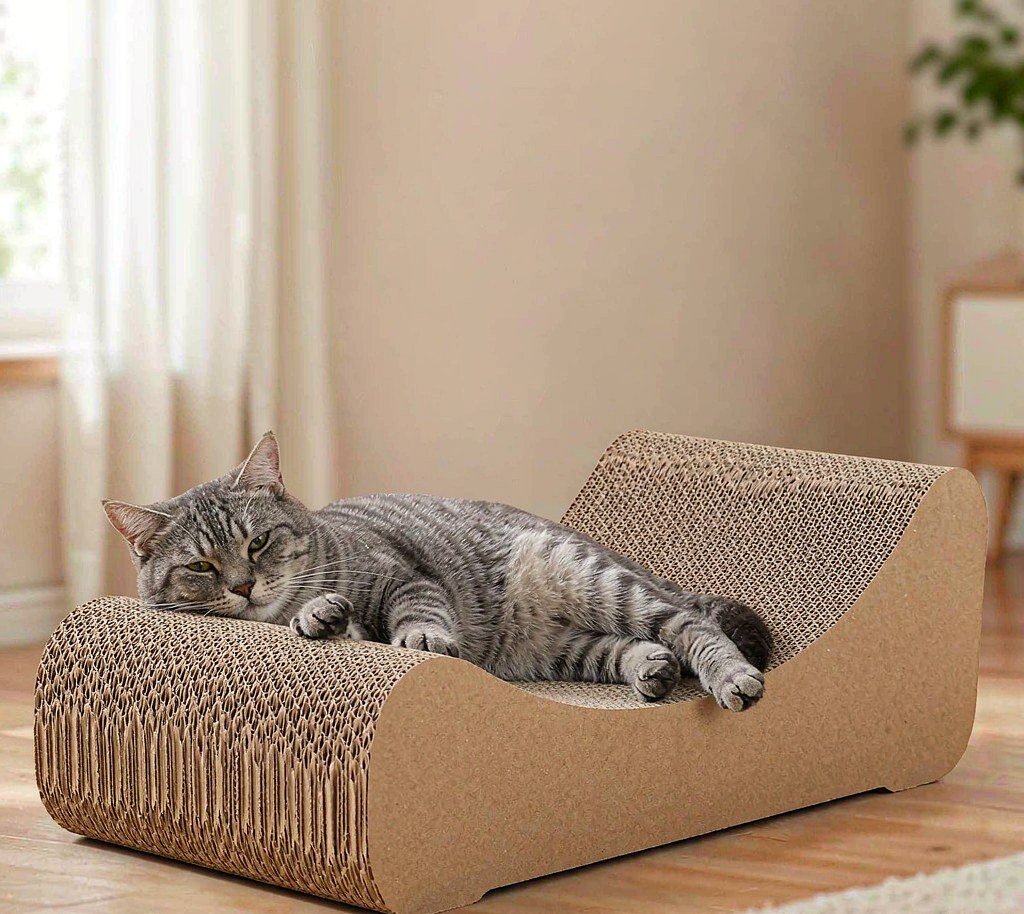
Scratching is not a behaviour problem. It is how a cat maintains its claws, marks territory and stretches the muscles across its shoulders and back. When a cat scratches furniture instead of a scratcher, the problem is almost never the cat — it is the product: too light, too short, or angled so that it slides across the floor the moment weight is applied.
For pet brands, that is an opportunity. Cat scratchers have moved from novelty accessory to a genuine furniture-adjacent category, and the products that sell are the ones that solve those three failures. Here is how the category is built, specified and packaged.
Why the Category Keeps Growing
The commercial logic is simple. Cats are living longer, indoor living is increasing in dense urban markets, and owners are buying more per animal than they did a decade ago. Scratchers sit at a useful intersection: inexpensive enough to be an impulse purchase, functional enough to be a repeat purchase, and bulky enough that retailers appreciate the presence on a shelf.
The category also benefits from a problem every cat owner recognises immediately. Nobody reads a long explanation of why they need a scratcher. They buy one because their sofa is being destroyed.
Corrugated or Solid Cardboard?
Nearly all mass-market scratchers are built from corrugated paperboard, cut into strips and laminated together with the flutes facing outward. The exposed flutes give claws something to catch, and the paper dust that comes off is part of the appeal — cats enjoy the resistance and the mess is harmless.
Three construction variables decide quality:
- Flute profile. A tighter flute gives a finer, more consistent scratching surface. Loose, coarse fluting sheds quickly and wears into visible valleys within weeks.
- Board density and lamination. Sheets are stacked and glued under pressure. Insufficient pressure or too little adhesive leaves voids, and voids become the point where the surface deforms under a heavier cat.
- Shape and mass. A scratcher needs enough footprint and weight to resist sliding. This is where cheap products fail most visibly, and where the simplest design improvement delivers the biggest difference in reviews.
Solid wood, sisal-wrapped posts and carpet-covered platforms serve a different part of the market. They last longer, cost more, and belong to a furniture positioning rather than a consumable one. Most brands end up offering both: a durable frame, plus replaceable corrugated refills — a model that generates repeat revenue without asking the customer to repurchase the whole product.
The Formats Worth Manufacturing
Flat scratchers and refill pads
The entry format. A laminated corrugated slab, often reversible so a worn face can be turned over. Cheap to produce, excellent for trial purchases and subscription refills.
Wave and incline scratchers
A curved profile that lets the cat stretch to full length. The curve also gives the product a sculptural silhouette, which photographs far better than a flat pad and improves retail presence.
Loungers and ramp loungers
A scratcher combined with a resting surface. This is the highest-value corrugated format because it replaces two purchases at once, and it allows a larger, bolder shape that stands out in an e-commerce listing image.
Scratcher houses and hideaways
A corrugated structure with an opening that gives the cat somewhere to sit and hide. Popular in small-apartment markets where floor space is limited and buyers want furniture that does two jobs.
Multi-tier and modular units
Stackable components that let the customer build up. More tooling, more complexity, and a stronger premium position — often sold as a starter module with expansion sets.
Materials, Adhesives and Safety
Paperboard is a simple material and an unforgiving one: everything in it ends up in a cat’s mouth, at least momentarily.
- Virgin or recycled corrugated board — both are used. Recycled board is common and usually acceptable, though print quality on the outer face is lower.
- Starch-based adhesives — the industry default for corrugated lamination because they are water-based, low odour and non-toxic. Avoid solvent-based adhesives entirely; cats are highly sensitive to odours.
- Water-based inks — relevant where any printing appears on the product rather than the packaging, and generally safer for a surface an animal will contact.
- Catnip — usually supplied as a loose sachet rather than impregnated into the board, because catnip loses potency over time and the sachet lets the owner refresh it.
If you sell into markets with toy or pet-product safety expectations, specify the material composition in writing and keep supplier declarations on file. Even where a formal standard does not apply, buyers increasingly ask.
Retail Packaging: Where Brands Win or Lose the Click
A scratcher is a bulky, low-density product, and that shapes its packaging more than anything else. Three approaches work:
Kraft wrap or sleeve. The economical route: a printed kraft band or sleeve that carries brand, size and a short benefit statement. Low material cost, low freight impact.
Printed display carton. A corrugated box with one open or window side so the texture is visible. Better for physical retail where the customer wants to feel the product before buying.
E-commerce-ready mailer. A corrugated box that is both the shipping container and the presentation pack. This eliminates a layer of outer packaging, reduces labour at the fulfilment centre, and survives parcel handling — the strongest option for direct-to-consumer brands.
Whichever you choose, the listing image matters as much as the print. Bold silhouettes, a visible scratching surface and a scale reference outperform flat photography. If you are selling a lounger, photograph a cat on it; the category sells through demonstrated use rather than specification.
Freight and Cube: The Hidden Cost Line
Corrugated scratchers are light and bulky, which means containers cube out long before they reach weight limits. Two levers reduce the damage:
- Design for nesting. Wave and curve profiles that stack into each other can raise container utilisation substantially compared with flat slabs stacked loosely.
- Ship unassembled where the customer can complete the product. Modular designs that slot together ship in a fraction of the volume, at the cost of a short assembly step.
Calculate landed cost per unit before approving a design. A shape that looks better on a website and costs a third more in freight may still be the right call, but it should be a deliberate one.
Quality Control for Corrugated Products
- Board thickness and flute consistency measured across the laminated block.
- Lamination integrity checked by hand-separating a sample; voids indicate insufficient pressure or adhesive.
- Load test: apply pressure comparable to a cat’s weight and confirm the structure does not slide or deform.
- Odour check on the finished goods, since adhesive smell is a common cause of negative reviews.
- Moisture check before packing — humid board warps in transit and arrives visibly curved.
- Drop and compression testing for the carton, not just the product.
Where the Price Points Sit
The category supports three tiers, and it is worth deciding which one you are building for before you draw anything. The entry tier is a reversible flat pad, sold as a low-commitment trial purchase. The mid tier is an incline, wave or lounger with a printed sleeve — this is where most volume sits, because the price is still accessible and the product visibly solves the problem. The upper tier is a modular system of durable frames with replaceable corrugated inserts, aimed at owners who have already bought two disposable scratchers and would rather stop buying them.
Brands that offer only the entry tier compete almost entirely on price. Brands that add a replaceable insert system create a repeat purchase without asking the customer to make a new decision, which is the most reliable growth mechanic in the category.
Frequently Asked Questions
How long should a corrugated cat scratcher last?
It depends on the cat, but a tightly laminated, properly sized product with good density should hold its shape far longer than the loose, low-density pads often sold at the bottom of the market. Size and mass matter more than any single material upgrade — a heavy scratcher that stays put is used more, and a scratcher that is used rarely looks new for a misleadingly long time.
Can scratchers be made without plastic?
Yes. A corrugated structure with a kraft sleeve and a paper catnip sachet can be entirely plastic-free, which suits European retail buyers and consumers who are actively reducing plastic in the home.
What is a sensible minimum order for a first run?
It depends on how many cutting dies the design requires. Simple flat pads and incline shapes need minimal tooling and can be produced in modest volumes, while multi-component loungers require more. Many brands launch with two or three shapes, prove which sells, then expand the range in the second order.
Should the catnip be included or sold separately?
Include a small sachet with the product to encourage first use, and sell refills separately if the product performs. It adds perceived value at low cost and creates a natural repeat purchase line.
If you are developing a cat scratcher range, send us the shapes you have in mind, your target retail price and your primary sales channel. We will come back with a board specification, a nesting plan to control freight, and packaging options matched to whether you sell in store or online. Our pet paper products line covers corrugated scratchers and their retail packaging, and you can request a quote with your dimensions and quantities.